Schola RAG · Contributor Atlas

The Voices Behind Schola

Every article Schola publishes is grounded in a curated knowledge base — Catholic instructors, scholars cited by the magisterium, sacred figures of Scripture, papal documents, faculty research, and a century of curated reading. This is who they are.

5Source Types
~163Curated Authors
159,825Retrievable Chunks
2026Knowledge as of 2026-05-27
What is Schola?

A Catholic anthropology

Schola is a Retrieval-Augmented Generation system that grounds every answer in a corpus assembled by a Catholic editor over years of reading, teaching, and discernment.

Schola is built from five distinct kinds of source, each ingested, chunked, embedded, and tagged so that the Schola pipelines — Trending, Opinion, Book Reviews, Responses, Generation — can retrieve and cite them with footnotes and a visible References block at the end of every piece.

  1. Instructor bios — short curated biographies of the Catholic clinicians, philosophers, theologians, and lay scholars who anchor DMU's intellectual life.
  2. DMU video lectures — summarized course segments from Divine Mercy University's library, machine-summarized for retrievability while preserving the instructor's framing.
  3. DMU faculty papers — peer-reviewed and book-chapter writing by the Catholic Christian Meta-Model of the Person team.
  4. Vatican documents — papal encyclicals, conciliar constitutions, dicasterial instructions, and Wednesday Audiences from the modern magisterium.
  5. Curated readings — a working library of classical and contemporary works in philosophy, theology, economics, and spirituality, hand-selected by the editor.

The corpus is large but it is not anonymous. Behind every citation in a Schola answer stands a named contributor — and every named contributor in the corpus is documented in the pages that follow.

Section II · 92 Contributors

DMU Instructors & Contributors

The Catholic clinicians, philosophers, theologians, and lay scholars whose teaching and writing form the spine of the Schola corpus. Each biography below is the curated text used by Schola's retrieval system itself.

PA
DMU Faculty
or Contributor

Sr. Prudence Allen

Biographical Sketch

Sister Prudence Allen, RSM, is a philosopher and member of the Religious Sisters of Mercy who earned her doctorate in philosophy from Claremont Graduate School. She is the author of the acclaimed three-volume work "The Concept of Woman," which comprehensively traces philosophical ideas about womanhood from ancient times to the modern era. In 2014, Pope Francis appointed her to the International Theological Commission, recognizing her distinguished contributions to Catholic philosophical thought.

HA
DMU Faculty
or Contributor

Hadley Arkes

Biographical Sketch

Hadley P. Arkes, Ph.D. (b. 1940), is the Edward N. Ney Professor of Jurisprudence and American Institutions Emeritus at Amherst College, where he taught for 50 years beginning in 1966. He earned his B.A. from the University of Illinois and his Ph.D. from the University of Chicago, where he studied under Leo Strauss. He is the founder and director of the James Wilson Institute on Natural Rights and the American Founding. He has written extensively on a priori moral principles and constitutional interpretation, publishing five books with Princeton University Press and additional volumes with Cambridge University Press.

BA
DMU Faculty
or Contributor

Fr. Benedict Ashley

Biographical Sketch

Fr. Benedict Ashley, O.P. (1915-2013) was a Dominican priest and influential Thomistic theologian who authored 19 books, including the foundational text "Health Care Ethics" (now in its fifth edition), which remains essential in Catholic medical ethics education. He earned advanced degrees in philosophy and sacred theology and served as President of Aquinas Institute of Theology and Professor of Moral Theology at the Pontifical John Paul II Institute, making him a major voice in 20th-century Catholic moral theology and health care ethics.

RA
DMU Faculty
or Contributor

Robert Audi

Biographical Sketch

Robert Audi is the O'Brien Professor of Philosophy at the University of Notre Dame, specializing in epistemology, ethics, rationality, and the philosophy of action. A past president of the American Philosophical Association and the Society of Christian Philosophers, he has written extensively on ethics and political philosophy, with particular attention to the relationship between church and state.

JB
DMU Faculty
or Contributor

Fr. John Bartunek

Biographical Sketch

Fr John Bartunek, LC, ThD, received his BA in History from Stanford University in 1990, graduating Phi Beta Kappa. He comes from an evangelical Christian background and became a member of the Catholic Church in 1991. After college he worked as a high school history teacher, drama director, and baseball coach. He then spent a year as a professional actor in Chicago before entering the religious Congregation of the Legionaries of Christ in 1993. He was ordained a Catholic priest in 2003 and earned his doctorate in moral theology summa cum laude in 2010. He provided spiritual support on the set of Mel Gibson's The Passion of the Christ while researching the 2005 Catholic best seller, Inside the Passion, the only authorized, behind-the-scene explanation of the film. Fr John has contributed news commentary regarding religious issues on CNN, Fox, and the BBC. He has appeared on Larry King Live, Hannity, and the Laura Ingraham radio show. He also served as the English-language press liaison for the Vatican's 2005 Synod of Bishops on the Eucharist. His most widely known book is The Better Part: A Christ-Centered Resource for Personal Prayer. He has also published Meditations for Mothers and A Guide to Christian Meditation. Fr John currently resides in New York, where he is continuing his writing apostolate and teaching Ethics at the Legionaries of Christ Center for Higher Studies.

KB
DMU Faculty
or Contributor

Kathryn Benes

Biographical Sketch

Kathryn M. Benes, Ph.D., is an Associate Professor and Director of the Training Clinic at the Institute for the Psychological Sciences (now Divine Mercy University). She earned her Ph.D. in School Psychology from the University of Nebraska-Lincoln in 1990 and has been a licensed psychologist since 1994. Dr. Benes previously served as Director of Mental Health Services for Catholic Social Services in the Diocese of Lincoln, where she developed a nationally recognized diocesan-wide mental health program that became an APA-accredited doctoral psychology internship site — the only accredited internship in the nation specifically designed to train psychologists from a Catholic perspective. Her primary areas of interest include clergy-psychology collaboration, organizational development within the Church, a Thomistic approach to lifespan development, and the integration of psychology and Christianity.

AB
DMU Faculty
or Contributor

Art Bennett

Biographical Sketch

Art Bennett, M.A., L.M.F.T., is a licensed marriage and family therapist. He holds a B.A. in philosophy and an M.A. in counseling psychology from Santa Clara University. He co-founded the Alpha Omega Clinics in Northern Virginia and Maryland and served as Clinical Director from 2002 to 2010. He was President and CEO of Catholic Charities for the Diocese of Arlington for 10 years and served as Vice President for international mental health at SAIC for 15 years. Together with his wife Laraine, he has published five books on integrating the Catholic faith and relationships.

TB
DMU Faculty
or Contributor

Thomas Berg

Biographical Sketch

Fr. Thomas V. Berg, Ph.D., is a priest of the Archdiocese of New York and Professor of Moral Theology at St. Joseph's Seminary (Dunwoodie), where he also serves as director of admissions. His areas of specialization include natural law theory, medical ethics, and philosophical and theological anthropology. He is the author of Hurting in the Church: A Way Forward for Wounded Catholics (Our Sunday Visitor, 2017). His work has appeared in Crisis Magazine, the National Catholic Register, The Wall Street Journal, and The New York Times.

DB
DMU Faculty
or Contributor

David Blankenhorn

Biographical Sketch

David Blankenhorn is founder and president of the Institute for American Values, a nonpartisan think tank dedicated to strengthening key American values and civil society. A Harvard graduate with expertise in family studies, he is the author of the acclaimed book "Fatherless America" and has spent decades bringing together family scholars and policymakers across ideological lines to advance understanding of marriage and family formation.

VB
DMU Faculty
or Contributor

Rev. Vivian Boland

Biographical Sketch

Rev. Vivian Boland, O.P., Ph.D., is a Dominican friar of the Province of Ireland and Director of the Aquinas Institute at Blackfriars Hall, Oxford, where he teaches moral and pastoral theology and lectures widely on Thomas Aquinas and education. He holds a doctorate in sacred theology from the Pontifical University of St. Thomas Aquinas (Angelicum) in Rome and is professor aggregatus in the Faculty of Theology there. His book St Thomas Aquinas (Scholasbury Library of Educational Thought, 2007) is regarded as a significant study on Aquinas's educational philosophy.

MB
DMU Faculty
or Contributor

Maria Brackett

Biographical Sketch

Maria Brackett is the Program Director of the Spiritual Direction Certificate at Divine Mercy University, bringing nearly 15 years of experience as a spiritual director and retreat director. She has been instrumental in developing and expanding DMU's original certificate program, which offers online, asynchronous formation for lay spiritual directors across four eight-week modules. Her leadership has helped the program serve hundreds of Catholics seeking training in this vital ministry.

BB
DMU Faculty
or Contributor

Fr. Brian Bransfield

Biographical Sketch

Msgr. J. Brian Bransfield, S.T.D., is a priest of the Archdiocese of Philadelphia. He served as General Secretary of the United States Conference of Catholic Bishops from 2016 to 2020, having previously served as Associate General Secretary and Executive Director of the USCCB Secretariat for Evangelization and Catechesis. He holds a doctorate in moral theology from the Pontifical John Paul II Institute for Studies on Marriage and Family. He has served on the faculty of Saint Charles Borromeo Seminary and as a lecturer at The Catholic University of America and the Dominican House of Studies.

SB
DMU Faculty
or Contributor

Fr. Stephen Brett

Biographical Sketch

Fr. Stephen Brett, SSJ, is a Josephite priest and moral theologian who serves as chairperson of the moral theology department at his seminary. A member of the Society of St. Joseph of the Sacred Heart (Josephites), a religious community dedicated to serving the African American Catholic community, Fr. Brett holds degrees from the Catholic University of America and St. Charles Borromeo Seminary. He is known for his teaching on the sacrament of penance and reconciliation, sacramental healing, and the theology of grace.

AB
DMU Faculty
or Contributor

Arthur Brooks

Biographical Sketch

Dr. Arthur C. Brooks is the Parker Gilbert Montgomery Professor of the Practice of Nonprofit and Public Leadership at Harvard Kennedy School and Professor of Management Practice at Harvard Business School. Previously serving as the 11th President of the American Enterprise Institute (2009-2019), he holds a Ph.D. in behavior and is a leading expert on the science of happiness. He is the author of thirteen books, including the New York Times bestseller "From Strength to Strength."

EB
DMU Faculty
or Contributor

E. Christian Brugger

Biographical Sketch

Dr. E. Christian Brugger holds the J. Francis Cardinal Stafford Chair of Moral Theology at St. John Vianney Theological Seminary in the Archdiocese of Denver and serves as a senior research fellow of ethics at the Culture of Life Foundation in Washington, D.C. He earned his doctorate in moral theology from Oxford University and holds master's degrees from Oxford, Harvard Divinity School, and Seton Hall University. Dr. Brugger specializes in bioethics, sexual ethics, and moral cooperation, and is a prolific author and columnist whose work addresses complex contemporary ethical questions for Catholic audiences.

IB
DMU Faculty
or Contributor

Ian Butler

Biographical Sketch

Ian Butler, LMHP, M.A., M.T.S. is a Catholic clinician who has worked since 1999 as a counselor for Catholic Social Services with the Diocese of Lincoln Nebraska, a clinical site specializing in the integration of the truths of the Catholic faith with Psychology. He has a Masters in Counseling from Franciscan University with a concentration in Christian Counseling as well as a Masters in Theological Studies from Ave Maria University's Institute for Pastoral Theology. Since 2006, Ian has increasingly focused his clinical work toward providing professional counseling services by telephone to Catholics around the world, many of whom are unable to find faithful Catholic counseling in their area. He is the Executive Director of Holy Family Counseling Services and is currently developing an apostolate to work specifically with priests and seminarians: St. John Vianney Counseling Services. Since 2007, he has been a faculty member for the Institute for Priestly Formation. He is married and has three children.

AC
DMU Faculty
or Contributor

Allan Carlson

Biographical Sketch

Allan C. Carlson, Ph.D., is President Emeritus of the Howard Center for Family, Religion and Society and founder and longtime International Secretary of the World Congress of Families. He is also editor of The Natural Family: An International Journal of Research and Policy. Dr. Carlson's academic work focuses on the family as a social institution, addressing the underlying causes of population decline, the effects of taxation and regulation on family well-being, and historical efforts to implement a family wage in the United States. His career has included serving as Assistant Director of the Governmental Affairs Office for the Lutheran Council in the U.S.A., NEH Fellow at the American Enterprise Institute, Executive Vice President of The Rockford Institute, and Member of the National Commission on Children. In 1997, he co-founded the Howard Center for Family, Religion and Society, a research and advocacy organization focused on strengthening the natural family.

WC
DMU Faculty
or Contributor

Wendy Cleaver

Biographical Sketch

Wendy Cleaver is a spiritual director and pastoral minister with over fifteen years of experience serving in church ministry. She brings a contemplative, trauma-informed, and embodied approach to spiritual direction work and pastoral care, drawing on her previous experience as a hospice chaplain and in educational leadership roles.

WC
DMU Faculty
or Contributor

William Coulson

Biographical Sketch

Dr. William Coulson is a psychologist trained under Carl Rogers and Abraham Maslow at the Western Behavioral Sciences Institute, holding doctorates in both philosophy and counseling psychology. Initially a pioneer in humanistic psychology and encounter group methodology, he later became a prominent critic of the approach, particularly after observing its negative effects on religious communities. He has lectured extensively to Catholic and Protestant groups on the dangers of certain psychotherapeutic methods.

PD
DMU Faculty
or Contributor

Paula D'Arcy

Biographical Sketch

Paula D'Arcy is an author, retreat leader, speaker, playwright, and former psychotherapist. In 2001 she established Red Bird Foundation, which supports the growth and spiritual development of those in need throughout the world. The foundation has twice sponsored WOMENSPEAK, an international conference that honors the woman's voice as a force of peace and healing for the world. D'Arcy survived the loss of her husband and young daughter in an accident in 1975. She was three months pregnant at the time. Among her bestselling books are Gift of the Red Bird, Waking Up to This Day, and the award-winning Stars at Night. D'Arcy serves as an adjunct faculty member of the Oblate School of Theology in San Antonio, Texas.

PD
DMU Faculty
or Contributor

Paul deLadurantaye

Biographical Sketch

Msgr. Paul F. deLadurantaye, S.T.D., is a priest of the Catholic Diocese of Arlington, named a Chaplain to His Holiness (Monsignor) by Pope Francis in 2024. He was ordained by Pope John Paul II in 1988 and holds a doctorate in moral theology from the Pontifical John Paul II Institute for Studies on Marriage and Family. He served on the faculty of the Notre Dame Graduate School of Christendom College and as Secretary for Catechetics and Sacred Liturgy for the Diocese of Arlington before his appointment to the Vatican Secretariat of State.

BD
DMU Faculty
or Contributor

Bill Donohue

Biographical Sketch

Bill Donohue holds a doctorate in sociology from New York University and has served as President and CEO of the Catholic League for Religious and Civil Rights since 1993, transforming it into the nation's largest Catholic civil rights organization. An author of twelve books and thousands of articles, Donohue has been a prominent voice advocating for Catholic interests in media, education, and public policy.

SD
DMU Faculty
or Contributor

Fr. Stephen Dougherty

Biographical Sketch

Father Stephen J. Dougherty was an ordained priest and faculty member at St. Charles Borromeo Seminary who combined his training as a certified clinical psychologist with his pastoral ministry. Ordained in 1973, he served the Archdiocese of Philadelphia and integrated psychological expertise into his priestly formation work with seminarians.

PF
DMU Faculty
or Contributor

Patrick Fagan

Biographical Sketch

Patrick F. Fagan, Ph.D., is Senior Fellow and Director of the Marriage and Religion Research Institute (MARRI) at The Catholic University of America, examining the relationships among family, marriage, religion, and America's social problems. He earned his doctorate from University College Dublin and previously served as Deputy Assistant Secretary for Family and Community Policy at the U.S. Department of Health and Human Services and as a senior fellow at the Heritage Foundation for thirteen years. He has authored over thirty synthesis papers and commissioned dozens of original research projects in marriage, family, child development, and religious practice.

RF
DMU Faculty
or Contributor

Richard Fitzgibbons

Biographical Sketch

Dr. Rick Fitzgibbons is the director of the Institute for Marital Healing outside Philadelphia and has worked with several thousand couples over the past 34 years. Trained in psychiatry at the Hospital of the University of Pennsylvania and the Philadelphia Child Guidance Center, he participated in cognitive therapy research with Aaron T. Beck. In 1986 he wrote a seminal paper on the psychotherapeutic uses of forgiveness in the treatment of excessive anger and in 2000 coauthored Helping Clients Forgive: An Empirical Guide for Resolving Anger and Restoring Hope with Dr. Robert D. Enright. Dr. Fitzgibbons is a marital educator and has given many annual conferences on growth in marital self-giving. He is an adjunct professor at the Pontifical John Paul II Institute for Studies on Marriage and Family at Catholic University and serves on the Pediatric Psychosocial Development Committee of the American College of Pediatricians. He is also a consultant to the Congregation for Clergy at the Vatican.

KF
DMU Faculty
or Contributor

Fr. Kevin Flannery

Biographical Sketch

Rev. Kevin Flannery, S.J., is a Professor of the History of Ancient Philosophy at the Pontifical Gregorian University and a Catholic moral philosopher specializing in ethics and action theory. He has served as a consultor to the Sacred Congregation for the Doctrine of the Faith since 2002, is a member of the Pontifical Academy of Saint Thomas Aquinas, and is a past-president of the American Catholic Philosophical Association. His scholarly work focuses on Aristotelian ethics and the moral philosophy of Thomas Aquinas.

MF
DMU Faculty
or Contributor

Marc OCD Foley

Biographical Sketch

Marc Foley, O.C.D., is a Discalced Carmelite priest of the Washington Province and a spiritual director trained in both psychology and spirituality. He is the author of ten books on Carmelite spirituality, including "The Ascent of Mount Carmel: Reflections" and "The Dark Night: Psychological Experience and Spiritual Reality." He serves as publisher of ICS Publications and director of formation at the Carmelite House of Studies in Washington, D.C.

JF
DMU Faculty
or Contributor

Fr. Jose Antonio Fortea

Biographical Sketch

Fr. José Antonio Fortea Cucurull is a Spanish Roman Catholic priest of the Diocese of Alcalá de Henares (Madrid), born in Barbastro, Spain, on October 11, 1968. He is one of the Catholic Church's foremost experts on demonology and exorcism. Fr. Fortea earned his bachelor's degree in Theology at the University of Navarra and his licentiate at the Pontifical University of Comillas. His licentiate thesis on exorcism, published under the title Daemoniacum, first brought him to prominence in Spain. His most notable work is Summa Daemoniaca, a comprehensive treatise on demonology and an exorcist's manual. He is also the author of Exorcistica and a cycle of ten novels about the Book of Revelation. His book Interview With an Exorcist: An Insider's Look at the Devil, Demonic Possession, and the Path to Deliverance is widely read in English. Fr. Fortea has written extensively on exorcism, demonic possession, and related theological topics, and has served as an appointed exorcist for his diocese.

RG
DMU Faculty
or Contributor

Robert P. George

Biographical Sketch

Robert P. George is the McCormick Professor of Jurisprudence and Director of the James Madison Program in American Ideals and Institutions at Princeton University, with advanced degrees from Harvard and Oxford universities. His scholarly work focuses on philosophy of law, constitutional law, and moral and political philosophy, and he has served on the U.S. Commission on International Religious Freedom and the President's Council on Bioethics.

JG
DMU Faculty
or Contributor

James Giordano

Biographical Sketch

James Giordano is Chief of the Neuroethics Studies Program at the Pellegrino Center for Clinical Bioethics at Georgetown University Medical Center and Professor in the Departments of Neurology and Biochemistry. He also serves as Senior Bioethicist of the Department of Defense Medical Ethics Center. His prolific scholarly output includes over 350 peer-reviewed publications and 9 books focusing on neural mechanisms of decision-making, neurotechnology, and the ethical implications of emerging brain science.

PG
DMU Faculty
or Contributor

Paul Gondreau

Biographical Sketch

Dr. Paul Gondreau is a Professor of Theology at Providence College with over twenty-five years of teaching experience and a doctorate in Sacred Theology from the University of Fribourg, Switzerland. His scholarly expertise encompasses moral theology, Christology, and the theology of St. Thomas Aquinas, with particular focus on sacramental theology, Christian anthropology, and the moral meaning of human sexuality. An accomplished author and associate editor of the journal Nova et Vetera, Dr. Gondreau has published extensively on topics ranging from the passions of Christ to the Catholic vision of Christian literature and the theology of disability.

BG
DMU Faculty
or Contributor

Fr. Benedict Groeschel

Biographical Sketch

Fr. Benedict J. Groeschel, C.F.R. (1933-2014), was an American Franciscan friar, Catholic priest, psychologist, author, and television host. In 1987, he co-founded the Franciscan Friars of the Renewal, a community dedicated to preaching reform and serving the poor. He was the author of over 30 books and recorded more than 100 audio and video series. A popular weekly host on EWTN, he also served as a professor of pastoral psychology at St. Joseph's Seminary in New York and as an adjunct professor at the Institute for Psychological Sciences in Arlington, Virginia. In 1985, he co-founded the Good Counsel Homes for homeless pregnant women and children.

SG
DMU Faculty
or Contributor

Stephen Gross

Biographical Sketch

Dr. Stephen Gross is a faculty member associated with Divine Mercy University (formerly the Institute for the Psychological Sciences). He has contributed to the university's educational programs in psychology and counseling within a Catholic intellectual framework. A native of Virginia, Dr. Gross earned his B.A. in Political Science and Religion from Hampden-Sydney College before pursuing graduate studies in psychology.

SG
DMU Faculty
or Contributor

Stephen Grundman

Biographical Sketch

Stephen Grundman, Ph.D., is Associate Vice President of Academic Affairs (Special Projects) and Assistant Professor of Integrative Studies at Divine Mercy University. Dr. Grundman holds a Ph.D. from The Catholic University of America and a B.A. from Thomas Aquinas College. He joined the Institute for the Psychological Sciences (now Divine Mercy University) full-time in 2010. He teaches courses on the nature of the person, rational moral development, and friendship, marriage, and family life. His research interests include realist metaphysics, philosophical and theological anthropology, moral and emotional development, virtue and vice, and the integration of a Catholic-Christian vision of the person with psychology and neuroscience. Dr. Grundman served as the first Director (and later AVP) of Digital Learning and Innovation at DMU, co-leading the development of the university's first two online programs (M.S. in Psychology and M.S. in Counseling) and its online certificate in Spiritual Direction.

JH
DMU Faculty
or Contributor

Janet Haggerty

Biographical Sketch

Dr. Janet Haggerty is an Associate Professor of Systematic Theology at Saint Charles Borromeo Seminary in Wynnewood, Pennsylvania. Her scholarly work focuses on systematic theology and its intersection with pastoral formation and the life of the Church. Dr. Haggerty brings a depth of theological expertise to her teaching and presentations on Catholic intellectual tradition.

SH
DMU Faculty
or Contributor

Stephen Hamel

Biographical Sketch

Dr. Hamel is a licensed psychologist in the states of New Jersey and Virginia. He is a Diplomate in Behavioral Medicine at the International Academy of Behavioral Medicine, Counseling and Psychotherapy (IABMCP), as well as a Diplomate in Professional Counseling (IABMCP). In addition, Dr. Hamel is certified by the American Board of Professional Psychology (ABPP), is a licensed registered nurse, is a certified school psychologist, and is Trauma/Disaster certified by the American Red Cross.

JH
DMU Faculty
or Contributor

Rev. John F. Harvey

Biographical Sketch

Rev. John F. Harvey, OSFS (1918-2010), was an American Catholic priest, moral theologian, and founder of Courage Apostolate, a Catholic ministry providing spiritual support to men and women experiencing same-sex attraction who seek to live in interior chastity. At the request of Cardinal Terence Cooke, Fr. Harvey founded Courage in 1980, which held its first meeting at the Church of St. Joseph in New York City. An Oblate of St. Francis de Sales, he directed the apostolate for 28 years before retiring in 2008, establishing a legacy of compassionate pastoral care grounded in Catholic teaching on human sexuality.

MH
DMU Faculty
or Contributor

Bishop Martin Holley

Biographical Sketch

Bishop Martin D. Holley (born 1954) is an American Catholic prelate ordained to the priesthood in 1987 for the Diocese of Pensacola-Tallahassee. He served as auxiliary bishop of the Archdiocese of Washington from 2004 to 2016 before his appointment as Bishop of Memphis in 2016, and previously completed theological studies at The Catholic University of America.

JH
DMU Faculty
or Contributor

Fr. John Hopkins

Biographical Sketch

Fr. John Hopkins is a Legionary of Christ priest ordained by Saint John Paul II in 1981, holding degrees in Humanities, Philosophy, Psychology, and Moral Theology. He served as President of Divine Mercy University and is Director of The Divine Mercy Clinic and Family Center, having spent 18 years in ministry in Washington, DC, where he helped establish the Our Lady of Bethesda Retreat Center. Fr. Hopkins was instrumental in developing DMU's spiritual direction programs and continues to serve as a prominent voice in Catholic mental health and spiritual direction.

KH
DMU Faculty
or Contributor

Keith Houde

Biographical Sketch

Keith A. Houde, Ph.D., is Associate Professor of Psychology and Chair of the Department of Psychology at Ave Maria University in Florida. Dr. Houde holds a B.A. in Psychology and Theology from Franciscan University of Steubenville, an M.A. in Psychology from Duquesne University, an M.A. in Theology from Fuller Theological Seminary, and a Ph.D. in Clinical Psychology from Fuller Theological Seminary. He previously worked as a clinical psychologist within a Veterans Affairs Medical Center in Maine, serving as psychology training director for a predoctoral internship and postdoctoral fellowship program. His areas of expertise include clinical health psychology, psychological assessment, psychotherapeutic processes, and motivational interviewing. He co-authored History and Systems of Psychology (Cambridge University Press) with James F. Brennan.

MJ
DMU Faculty
or Contributor

Sr. Mary Ann Johnson

Biographical Sketch

Sister Mary Ann Johnson is a consecrated virgin of the Archdiocese of Philadelphia. She served as Director of Religious Education at St. Mary's Parish in Phoenixville, Pennsylvania, and holds a Master of Arts degree from the Religious Studies Division of St. Charles Borromeo Seminary, where she is a member of the adjunct faculty.

LK
DMU Faculty
or Contributor

Leon Kass

Biographical Sketch

Leon Kass, M.D., Ph.D., is an American physician, biochemist, and public intellectual who served as chairman of the President's Council on Bioethics from 2001 to 2005, leading efforts on human cloning policy and bioethical issues. He holds a Ph.D. in biochemistry from Harvard University and is the Addie Clark Harding Professor Emeritus in the College and Committee on Social Thought at the University of Chicago. A self-described "old-fashioned humanist," Dr. Kass is a proponent of liberal arts education and has written extensively on the ethics of biotechnology, human dignity, and the meaning of human life.

BK
DMU Faculty
or Contributor

Ben Keyes

Biographical Sketch

Benjamin Keyes, Ph.D., Ed.D., is Professor and Director of the Center for Trauma and Resiliency Studies at Divine Mercy University in Arlington, Virginia. Dr. Keyes received his Doctorate in Rehabilitation Counseling from International College (1985) and a subsequent doctorate in Counseling Psychology from the University of Sarasota (2003). He also holds doctoral degrees in Theology, Divinity, and Ministry. His clinical specialties include dissociative disorders, domestic violence, child abuse, addictions, and mood and anxiety disorders. Dr. Keyes has been in private practice for over 35 years and has been a researcher in the area of trauma and dissociation for over 20 years. Dr. Keyes and his colleagues received the Richard A. Kluft Research Award for work and research in the People's Republic of China from the Journal of Trauma and Dissociation and the International Society for the Study of Trauma and Dissociation.

AK
DMU Faculty
or Contributor

Aaron Kheriaty

Biographical Sketch

Dr. Aaron Kheriaty is a psychiatrist and bioethicist who earned his MD from Georgetown University and completed psychiatry residency training at UC Irvine, where he served for fifteen years as Director of the Medical Ethics Program and a professor at UCI School of Medicine. He is currently Fellow and Director of the Bioethics, Technology and Human Flourishing Program at the Ethics and Public Policy Center in Washington, DC, and has authored numerous articles on bioethics, public health, psychiatry, and policy.

PK
DMU Faculty
or Contributor

Peter Kleponis

Biographical Sketch

Peter C. Kleponis, Ph.D. is a Licensed Clinical Therapist and Assistant Director of Comprehensive Counseling Services in West Conshohocken, PA. He holds an M.A. in Clinical-Counseling Psychology from LaSalle University in Philadelphia, PA and a Ph.D. in General Psychology from Capella University. Dr. Kleponis specializes in marriage & family therapy, pastoral counseling, resolving anger, men's issues, and pornography addiction recovery. He is Certified in the Diagnosis and Treatment of Sexual Addictions by The American Association of Christian Counselors' Light University. Dr. Kleponis travels throughout the country educating people on how to win the battle against pornography through his Fighting Porn in Our Culture…and Winning! program. He has been a guest on EWTN television programs such as Women of Grace, Franciscan University Presents, and Crossing the Goal. He is the author of The Pornography Epidemic: A Catholic Approach.

LK
DMU Faculty
or Contributor

Lisa Klewicki

Biographical Sketch

Dr. Lisa Klewicki is a Licensed Clinical Psychologist who has degrees in Psychology and Theology. She integrates the Catholic faith with sound psychology to provide psychotherapy, consultations, and assessments. She also addresses both lay and academic audiences through various types of speaking engagements. Dr. Klewicki speaks on such topics as intimacy, relationships, marriage, family, mental health and women's issues from a Catholic perspective.

GK
DMU Faculty
or Contributor

Greg Kolodziejczak

Biographical Sketch

Dr. Greg Kolodziejczak, PsyD, PhD, is a clinical psychologist in private practice specializing in borderline personality disorder and the integration of psychology with Catholic theology. With advanced degrees including a doctorate from Divine Mercy University's Institute for the Psychological Sciences and a master's degree in theology from Catholic University of America, Dr. Kolodziejczak brings a distinctly Catholic perspective to his treatment approach. His earlier training in physics and ocean engineering at the Naval Academy and MIT provides a unique interdisciplinary foundation for his clinical and scholarly work.

RK
DMU Faculty
or Contributor

Robert Kugelmann

Biographical Sketch

Robert Kugelmann is an Emeritus Professor of Psychology at the University of Dallas with expertise in medical anthropology, critical health psychology, and the history of psychology. He holds a Ph.D. in psychology from the University of Dallas and is the author of "Psychology and Catholicism: Contested Boundaries" and other scholarly works examining the intersection of psychology and spirituality.

ML
DMU Faculty
or Contributor

Margaret Laracy

Biographical Sketch

Margaret Laracy has clinical interests in individual, family, and group psychotherapy, as well as psychological testing. She completed her predoctoral internship in 2011 at the Outreach Community Counseling Center through the APA-accredited Chicago Area Christian Training Consortium. She teaches Law, Ethics, and Psychology; Cultural, Religious, and Individual Diversity in Clinical Practice; and an integrative case conceptualization seminar. She is also co-teaching Group Psychotherapy. Her scholarly interests include various topics in the relationship between Christian anthropology and clinical psychology. In particular, she is interested in the role of beauty in mental health and in psychotherapy, which was the topic of her doctoral dissertation.

SL
DMU Faculty
or Contributor

Su Li Lee

Biographical Sketch

Su Li Lee's clinical interests are primarily in individual and group psychotherapy, as well as behavioural health consultation and psychological testing. She completed her pre-doctoral internship at an APA-accredited consortium, with dual-site rotations at a community mental health center and a medical center. Su Li Lee's scholarly interests include the intersection of philosophy, theology, and psychology, as well as the nature of statistics in the psychological sciences. Her particular focus at present is on the philosophy of love and creation as gift, and how these affect psychotherapy and the person of the psychotherapist. Dr. Lee is pursuing licensing as a clinical psychologist in the states of Virginia and Maryland.

TL
DMU Faculty
or Contributor

Thomas Lickona

Biographical Sketch

Dr. Thomas Lickona is a developmental psychologist and professor emeritus of education at the State University of New York at Cortland, where he founded and continues to direct the Center for the 4th and 5th Rs (Respect and Responsibility). He has been a visiting professor at Harvard and Boston Universities, president of the Association for Moral Education, and Board member with the Character Education Partnership. He speaks around the world on fostering moral values and character development. His eight books on character development include Raising Good Children, Educating for Character, Character Matters, and, with his wife Judith, a book for teens, Sex, Love, and You: Making the Right Decision. Educating for Character won a Christopher Award for "affirming the highest values of the human spirit." He received the Character Education Partnership's "Sandy Award" for Lifetime Achievement in Character Education.

JL
DMU Faculty
or Contributor

Msgr. James Lisante

Biographical Sketch

Msgr. James P. Lisante is the Pastor of Our Lady of Lourdes Parish in Malverne Park, Long Island. Ordained in 1981 for the Diocese of Rockville Centre, he served as diocesan Director of the Office of Family Ministry and later as Director of The Christophers. A best-selling author of four books and award-winning columnist, his writing has appeared in over 300 newspapers. He has served as a regular contributor on the Fox News Channel, ABC-Eyewitness News, and PBS, and hosts Personally Speaking on the Catholic Channel of SiriusXM.

WL
DMU Faculty
or Contributor

Archbishop William Lori

Biographical Sketch

Most Reverend William E. Lori (b. 1951) is the 16th Archbishop of Baltimore, appointed by Pope Benedict XVI in 2012. Born in Louisville, Kentucky, he holds a doctorate in sacred theology from The Catholic University of America. Ordained to the priesthood in 1977 for the Archdiocese of Washington, he was appointed Auxiliary Bishop of Washington in 1995 and Bishop of Bridgeport, Connecticut, in 2001. He has served as vice-president of the United States Conference of Catholic Bishops and as Supreme Chaplain of the Knights of Columbus since 2005.

TL
DMU Faculty
or Contributor

Fr. Thomas Loya

Biographical Sketch

Fr. Thomas J. Loya is a Byzantine Catholic priest and pastor of Annunciation of the Mother of God Byzantine Catholic Parish in Homer Glen, Illinois. Before entering the seminary, Fr. Loya earned a degree from the Cleveland Institute of Art and pursued a career in commercial art and design. He attended the North American College in Rome and was ordained in 1982. He later earned a Master's in Counseling and Human Services (1993). Fr. Loya is co-founder and director of the Tabor Life Institute and hosts two radio programs: "Light of the East," heard in more than 60 cities across the United States on EWTN Radio and other Catholic networks, and "Beyond the Veil" on Ave Maria Radio. He is renowned for his application of St. John Paul II's Theology of the Body to everyday life, Eastern Christian spirituality, and the integration of faith and psychology.

RL
DMU Faculty
or Contributor

Robert Luddy

Biographical Sketch

Robert L. Luddy is a Catholic entrepreneur and philanthropist who transformed a small sheet metal shop into CaptiveAire Systems, a leading commercial kitchen ventilation manufacturer employing over 1,000 people. Beyond his business success, he has founded multiple educational institutions including Franklin Academy, St. Thomas More Academy, and the Thales Academy chain, and received the Benemerenti Medal from Pope Benedict XVI for his service to the Church and community.

CL
DMU Faculty
or Contributor

Chris Lynch

Biographical Sketch

Dr. Christina P. Lynch is a clinical psychologist who earned the first Doctor of Clinical Psychology degree from the Institute for the Psychological Sciences (IPS) at Divine Mercy University and received the inaugural Distinguished Alumni Award from the institution. She is a founding board member and past president of the Catholic Psychotherapy Association and previously served as Director of Psychological Services at St. John Vianney Theological Seminary in Denver, Colorado.

GM
DMU Faculty
or Contributor

Graham McAleer

Biographical Sketch

Graham McAleer is a Full Professor of Philosophy at Loyola University Maryland with expertise in medieval philosophy, moral theory, business ethics, and Catholic social thought. Holding a Ph.D. from Catholic University of Louvain, he is the author of several books and teaches across both the philosophy department and the Sellinger School of Business.

MM
DMU Faculty
or Contributor

Matthew McWhorter

Biographical Sketch

Matthew R. McWhorter, Ph.D., is Assistant Professor of Integrative Studies at Divine Mercy University. Dr. McWhorter holds a Ph.D. in Catholic Theology from Ave Maria University and an M.A. in Philosophy. He has taught graduate and undergraduate philosophy and theology courses at Georgia State University, Ave Maria University, Catholic Distance University, and Holy Spirit College. His research focuses on the integration of religio-philosophical psychology and the contemporary human sciences. His recent publications include the book Meditation as Spiritual Therapy. He works within the Department of Integrative Studies at Divine Mercy University.

LM
DMU Faculty
or Contributor

Msgr. Livio Melina

Biographical Sketch

Monsignor Livio Melina is a distinguished moral theologian who served as President of the Pontifical John Paul II Institute for Studies on Marriage and Family from 2006 to 2016, and as a tenured Professor of Fundamental Moral Theology there since 1991. Honored with the title of Monsignor by Pope John Paul II, he is recognized as one of the foremost contemporary exponents of moral theology and bioethics. He founded and has directed the International Research Group on Moral Theology since 1997.

FM
DMU Faculty
or Contributor

Fr. Frederick Miller

Biographical Sketch

Fr. Frederick L. Miller, a priest of the Archdiocese of Newark, NJ, is the Chairman of the Department of Systematic Theology at Mount St. Mary's Seminary in Emmitsburg, Maryland. He has extensive parish experience and has spent nearly twenty years as a seminary professor and spiritual director. Fr. Miller is an author and a well-known retreat master. His books include The Grace of Ars.

FM
DMU Faculty
or Contributor

Frank Moncher

Biographical Sketch

Frank J. Moncher, Ph.D., is a clinical psychologist serving the Catholic Diocese of Arlington and Catholic Charities. He received his Ph.D. in Clinical-Community Psychology from the University of South Carolina in 1992 and spent several years on the faculty of the Medical College of Georgia. In 2000, he joined the Institute for the Psychological Sciences in Arlington, Virginia. His research interests include the integration of Catholic thought into psychotherapy, child and family development, and psychological assessment of candidates for the priesthood and religious life. He has presented on these topics in Italy, Spain, Mexico, as well as at national Christian conferences.

RN
DMU Faculty
or Contributor

Rev. Richard John Neuhaus

Biographical Sketch

Rev. Richard John Neuhaus (1936–2009) was a preeminent American Catholic intellectual and public theologian who founded the Institute on Religion and Public Life and served as editor of First Things magazine. Originally a Lutheran pastor who later converted to Catholicism, Neuhaus was a prophetic voice bringing Christian ethics into civic discourse through his influential writings and public engagement. His prolific contributions to Catholic social teaching, religious freedom, and the pro-life movement established him as one of the most significant Catholic voices in American public policy and religious thought of the late twentieth century. Born in Pembroke, Ontario, he served as a Lutheran pastor in Brooklyn from 1961 to 1978 before being received into the Catholic Church in 1990 and ordained a priest of the Archdiocese of New York. He founded First Things, an influential journal of religion and public life, in 1990. Time magazine named him one of the 25 most influential evangelicals in America in 2005.

AN
DMU Faculty
or Contributor

Fr. Aidan Nichols

Biographical Sketch

Rev. Aidan Nichols, O.P., is an English Dominican friar and prolific theologian renowned for his contributions to systematic theology and ecclesiology. Ordained in 1976, he has held academic positions at the University of Oxford and University of Cambridge, and served as the first John Paul II Memorial Visiting Lecturer at Oxford (2006-2008). He is the author of over 50 books drawing on patristic, medieval, and contemporary theological sources.

WN
DMU Faculty
or Contributor

William Nordling

Biographical Sketch

Dr. Nordling is one of the founding faculty members of the Institute for the Psychological Sciences. He is a licensed clinical psychologist in the state of Virginia. He also holds a number of specialized credentials in child, marriage, and family therapy and teaches both basic and advanced coursework in these areas at the Institute for the Psychological Sciences. Dr. Nordling is active as scholar, and in addition to his many publications, he has conducted over 200 presentations and training workshops nationally and internationally. As a respected leader in the field, in 2010 he served as the President of the Association of Play Therapy, and he currently serves on the Board of Directors and as President of the Catholic Psychotherapy Association.

GO
DMU Faculty
or Contributor

Fr. Gabriel O'Donnell

Biographical Sketch

Father Gabriel O'Donnell, O.P., is a Dominican priest with advanced degrees in liturgical studies from Notre Dame and spiritual theology from the Teresianum in Rome. He has taught at major Catholic institutions including the Pontifical Faculty of the Immaculate Conception and St. Charles Seminary, and serves as vice-postulator for the canonization causes of Father Michael McGivney and Rose Hawthorne.

AP
DMU Faculty
or Contributor

Angie Panos

Biographical Sketch

Dr. Angelea Panos is a clinical psychologist with a PhD based in Utah who specializes in mental health treatment and has contributed to professional conferences and publications on evidence-based psychological practice and community health issues.

HP
DMU Faculty
or Contributor

Harvey Payne

Biographical Sketch

Harvey Payne, Psy.D., is Vice President of Academic Affairs for Digital Learning at Divine Mercy University. He previously served as Associate Professor and Dean of the School of Counseling at the university. Dr. Payne has worked in the mental health field for over 30 years, with his primary work in organizations serving children and adolescents with a variety of life issues and disabilities. He completed a Post-Doctoral Fellowship at the Alfred I. duPont Hospital for Children in child psychology. He earned a Bachelor of Science from Lancaster Bible College, a Master of Arts from Denver Seminary, and his Psy.D. in Clinical Psychology. He has consulted overseas in Kuwait, Saudi Arabia, and Kazakhstan.

AP
DMU Faculty
or Contributor

Anna Pecoraro

Biographical Sketch

Dr. Anna Pecoraro, PsyD, RN, is an Associate Professor and Director of the Masters of Science in Psychology Program at Divine Mercy University's Institute for the Psychological Sciences. A licensed clinical psychologist in Pennsylvania, New Jersey, and Virginia, she holds a doctorate in clinical psychology from Widener University with concentrations in cognitive behavior therapy, psychoanalytic psychology, and health psychology. Her clinical practice and research focus on psychotherapy with individuals facing addictions, trauma, and spiritual distress, with particular expertise in HIV treatment engagement and SBIRT services in medical settings.

DR
DMU Faculty
or Contributor

Daniel N. Robinson

Biographical Sketch

Daniel N. Robinson (1937-2018) was a distinguished American psychologist and philosopher who spent 30 years at Georgetown University as a Distinguished Professor. He earned his PhD in Neuropsychology from CUNY and held academic positions at multiple prestigious institutions including Princeton and Columbia. Robinson authored 52 books, including the acclaimed "An Intellectual History of Psychology," and received the Lifetime Achievement Award from the American Psychological Association's Division of History of Psychology.

HR
DMU Faculty
or Contributor

Holiday Rondeau

Biographical Sketch

Dr. Holiday Rondeau has been involved in clinical work for over 20 years in institutional, educational and private practice settings. Her specialty is Child and Adolescent Psychology and Assessment. She has worked as a school psychologist in Quebec, Canada following clinical training at McGill University. She has been the Director of the Developmentally Delayed Unit and Director of the In-home Services Program at the Barry Robinson Treatment Center in Virginia Beach, Virginia. At Regent University, Dr. Rondeau was an Associate Professor and Director of the Psychological Services Center where she trained doctoral students in assessment and therapy while administrating the university clinic. Dr. Rondeau has held positions at the Institute for the Psychological Sciences as the Director of the M.S. Program and as the Dean of Students. She is currently the Director of the Psy.D. Program and the IPS Training Clinic. Her research interests include Integration of Psychology and Christianity, Play Therapy/Child Therapy, Assessment and Diagnostics, and Prayer and Healing.

CR
DMU Faculty
or Contributor

Christine Rosen

Biographical Sketch

Christine Rosen, Ph.D., is a senior editor of The New Atlantis and a senior fellow at the American Enterprise Institute, specializing in the social and cultural impact of technology and bioethics. She holds a Ph.D. in History from Emory University and has authored books including Preaching Eugenics: Religious Leaders and the American Eugenics Movement (Oxford University Press, 2004) and The Extinction of Experience: Being Human in a Disembodied World (W.W. Norton, 2024). Her essays and reviews have appeared in The New York Times Magazine, The Wall Street Journal, The Washington Post, and The New England Journal of Medicine.

AR
DMU Faculty
or Contributor

Alex Ross

Biographical Sketch

Dr. Ross teaches courses in social psychology and psychological measurement. His principal research interests include the impact of social and cultural change on the family and religious institutions. He holds a Ph.D. in Sociology from the Ohio State University. Prior to joining the faculty of the Institute for the Psychological Sciences, he held faculty positions in sociology at colleges and universities in Ohio, Michigan, and Florida. He and his wife, Martha, have two daughters and are members of St. John of the Cross Catholic Church in Vero Beach, Florida.

PR
DMU Faculty
or Contributor

Fr. Peter Ryan

Biographical Sketch

Fr. Peter F. Ryan, S.J., is the Michael J. McGivney Chair in Life Ethics at Sacred Heart Major Seminary in Detroit, where he has taught graduate theology since 2016. Born in Washington, D.C., he was ordained a Jesuit priest in 1987. He holds a doctorate in theology from the Pontifical Gregorian University in Rome and a master of divinity from Regis College, Toronto. He previously served as Executive Director of the Secretariat of Doctrine and Canonical Affairs at the USCCB, and as Professor of Moral Theology at Mount St. Mary's Seminary and Kenrick-Glennon Seminary.

BS
DMU Faculty
or Contributor

Brian Scarnecchia

Biographical Sketch

D. Brian Scarnecchia, M.Div., J.D., is an Associate Professor of Law at Ave Maria School of Law, where he teaches Jurisprudence, Catholic Social Thought and Law, and Bioethics and Law. He previously served on the faculty of Franciscan University of Steubenville, directing their Human Life Studies and Legal Studies programs. He is the founding president of the International Solidarity and Human Rights Institute, an NGO in consultative status with the United Nations. He is the author of Bioethics, Law, and Human Life Issues: A Catholic Perspective on Marriage, Family, Contraception, Abortion, Reproductive Technology, and Death and Dying.

KS
DMU Faculty
or Contributor

Kenneth Schmitz

Biographical Sketch

Kenneth L. Schmitz, Ph.D. (1922-2017), was a Canadian philosopher who taught at Trinity College, University of Toronto. His teaching career also included positions at Loyola Marymount University, Marquette University, Indiana University, and the Catholic University of America. After retiring, he worked for many years with the John Paul II Institute for Studies on Marriage and Family. His philosophical work sought to unite the metaphysical realism of the ancients with the modern concern for subjectivity and the interior life. He served as president of the Metaphysical Society of America in 1980.

AS
DMU Faculty
or Contributor

Fr. Aloysius Schwartz

Biographical Sketch

Venerable Aloysius Philip Schwartz (1930-1992) was an American Catholic priest ordained in 1957 for the Archdiocese of Washington. He founded the Sisters of Mary of Banneux and the Brothers of Christ religious orders in South Korea and established homes and schools for orphaned and neglected children across Korea, the Philippines, Mexico, Guatemala, Brazil, Honduras, and Tanzania. More than 170,000 impoverished children have graduated from the boarding schools he established. He was declared Venerable by Pope Francis in 2015.

PS
DMU Faculty
or Contributor

Phil Scrofani

Biographical Sketch

Philip Scrofani, Ph.D., ABPP, is Professor Emeritus at the Institute for the Psychological Sciences at Divine Mercy University, where he served as Co-Director of the Psy.D. program. Dr. Scrofani has spent over 50 years as a clinical psychologist and was a full-time professor at IPS for more than 20 years. He has been Board Certified by the American Board of Professional Psychology since 1990. He previously served as Director of Psychology for the Commission on Mental Health Services in Washington, D.C. His expertise encompasses clinical psychology, cognitive-behavioral therapy, group therapy, and research review. His clinical approach integrates sound psychological science with the Catholic Christian view of the human person. His work with the Catholic Christian Meta-Model of the Person (CCMMP) has contributed to deepening the understanding of the human person in clinical psychology. Dr. Scrofani received the 2024 Faculty Recognition Award from Divine Mercy University in recognition of his contributions to the formation of clinicians and the integration of faith and psychological science.

RS
DMU Faculty
or Contributor

Roger Scruton

Biographical Sketch

Sir Roger Scruton (1944-2020) was an English philosopher and prolific author specializing in aesthetics, political philosophy, and conservative thought. Trained in the analytic tradition at Cambridge University, he held the position of Professor of Aesthetics at Birkbeck College for over two decades and founded The Salisbury Review, a conservative political journal. A defender of objective value and tradition, Scruton authored over 50 books on architecture, philosophy, politics, and art, and was knighted in 2016 for his contributions to philosophy, teaching, and public education.

MS
DMU Faculty
or Contributor

Martin Seligman

Biographical Sketch

Martin E. P. Seligman, Ph.D. (b. 1942), is the Zellerbach Family Professor of Psychology at the University of Pennsylvania. He is widely known as the founder of positive psychology and for his earlier research on learned helplessness and depression. He earned his B.A. in philosophy summa cum laude from Princeton University and his Ph.D. in psychology from the University of Pennsylvania. He served as President of the American Psychological Association in 1998 and has authored more than 350 scholarly publications and 30 books.

CS
DMU Faculty
or Contributor

Fr. Charles Sikorski

Biographical Sketch

Rev. Charles Sikorsky, L.C., J.D., J.C.L., has served as President of Divine Mercy University (formerly the Institute for the Psychological Sciences) since 2007, guiding the institution's mission to integrate Catholic faith with the science of psychology. A member of the Legionaries of Christ, Fr. Sikorsky holds a Juris Doctor (J.D.) and a Licentiate in Canon Law (J.C.L.), bringing a distinctive legal and canonical perspective to his leadership of Catholic higher education and the formation of mental health professionals grounded in a Christian understanding of the human person. He holds a BA from Johns Hopkins University and was ordained in Rome in 2002.

VS
DMU Faculty
or Contributor

Vincent Edward Smith

Biographical Sketch

Dr. Vincent Edward Smith was a Thomistic philosopher and influential figure in Catholic philosophical circles who authored and edited numerous works examining the intersection of science and philosophy. His publications include "Philosophical Physics," "Science and Philosophy," and "The General Science of Nature," which became a standard text in Catholic colleges.

AS
DMU Faculty
or Contributor

Andrew Sodergren

Biographical Sketch

Dr. Sodergren holds Masters and Doctoral degrees in clinical psychology from the Institute for the Psychological Sciences (IPS) in Arlington, VA. IPS is the only graduate school in existence devoted to integrating the best psychological science with a Catholic view of the human person and the moral life. His doctoral dissertation, completed in 2009, was entitled Attachment and Morality: A Catholic Perspective. Dr. Sodergren's previous clinical work has been with the Alpha Omega Clinic and Consultation Service in Bethesda, MD and with Catholic Social Services of Southern Nebraska. He is trained in child, adult, marital/family, and group therapies as well as psychological assessment and testing, including vocational assessment for candidates to the priesthood or religious life. He is a certified Relationship Enhancement Couples Therapist. He is an active member of the Catholic Psychotherapy Association and the Society of Catholic Social Scientists and teaches a course on Issues in Psychological and Neurological Science: Gender, Marriage, and Family as an adjunct professor at the John Paul II Institute for Studies on Marriage and Family in Washington, DC.

DS
DMU Faculty
or Contributor

Dan Spadaro

Biographical Sketch

Dan Spadaro, LPC brings over fifteen years of counseling experience to his practice. A graduate of Franciscan University, Dan received both his undergraduate (Theology '92) and graduate (Counseling '97) degrees from this Ohio institution. Dan has worked as mental health counselor with families in Colorado since 1997 in a variety of settings: psychiatric hospital, residential treatment centers, and outpatient mental health offices. From 1999 to 2006, Dan volunteered with the Colorado Department of Corrections, to facilitate sexual addiction support groups for incarcerated men. Dan founded Imago Dei Counseling, a private practice dedicated to the integration of psychology and the Catholic faith and toward helping individuals and couples to rediscover their true image founded in God. Dan holds certification as a Certified Sexual Addictions Therapist (CSAT) and has been a Licensed Professional Counselor (LPC) in the state of Colorado since 1999.

MC
DMU Faculty
or Contributor

Sr. Mary Clare

Biographical Sketch

Sr. Mary Clare, a Sister of Notre Dame, holds a doctorate in counseling psychology. She is interested in integration of psychology with spirituality and religion, particularly Catholicism. She is a licensed professional counselor in the state of Ohio, and a board certified registered art therapist. She has taught college/university courses in religious studies, history, art, and psychology, and has served as a director of religious education and in provincial administration.

TS
DMU Faculty
or Contributor

Tim Staples

Biographical Sketch

Tim Staples (b. 1964) is the Director of Apologetics and Evangelization at Catholic Answers. A former Southern Baptist who converted to Catholicism in 1988 after studying the faith during his service in the U.S. Marine Corps, he spent six years in formation for the priesthood, earning a degree in philosophy from St. Charles Borromeo Seminary and studying theology at the graduate level at Mount St. Mary's Seminary. He has served as a Catholic apologist and evangelist for over twenty-five years.

GS
DMU Faculty
or Contributor

Gladys Sweeney

Biographical Sketch

Gladys Sweeney, Ph.D., is Dean Emerita and one of the founding members of the Institute for the Psychological Sciences (now Divine Mercy University). She served as the founder and academic dean of IPS, a graduate school in Arlington, Virginia, whose mission is to integrate sound psychological science with the Christian understanding of the nature and dignity of the human person. She received a Lifetime Achievement award for her contributions to the institution and has published on topics including faith, mental health, and grief.

RS
DMU Faculty
or Contributor

Richard Swinburne

Biographical Sketch

Richard Swinburne is an Emeritus Professor of Philosophy at the University of Oxford and Fellow of the British Academy, specializing in philosophy of religion and natural theology. For nearly two decades as Nolloth Professor of the Philosophy of the Christian Religion at Oxford, he developed rigorous philosophical arguments for theism through his influential trilogy on philosophical theology. A member of the Orthodox Church, Swinburne is recognized as a leading Christian apologist for the rational coherence of Christian faith.

TT
DMU Faculty
or Contributor

Tammy Tenaglia

Biographical Sketch

Tammy Tenaglia, Ph.D., is a licensed clinical psychologist based in Pennsylvania. She received her undergraduate degree from Drexel University and her Ph.D. in Clinical Psychology from Hahnemann University (now Drexel University College of Medicine). Dr. Tenaglia has extensive experience in the mental health field. She has served on the Board of Visitors for the School of Theology and Religious Studies at The Catholic University of America. She maintains a clinical practice in Lafayette Hill, Pennsylvania, where she provides psychological assessment and psychotherapy services.

CT
DMU Faculty
or Contributor

Craig Steven Titus

Biographical Sketch

Dr. Titus teaches the integration courses pertaining to the nature of the human person; practical reason and moral character; and marriage and family life. In addition to these areas, his research interests include virtue theory, emotional and moral development, psychology of virtue, and the integration of psychological sciences, philosophy, and theology. His book, Resilience and the Virtue of Fortitude: Aquinas in Dialogue with the Psychosocial Sciences (CUA Press, 2006), sets up a dialogue between virtue theory and the psychological research on resilience and overcoming difficulty. He has published numerous articles. He is co-editor of The Pinckaers Reader: Renewing Thomistic Moral Theology (CUA Press, 2005) and editor of nine other books. Dr. Titus previously worked as Researcher and Instructor at the University of Fribourg, where he served as Vice-Director of the St. Thomas Aquinas Institute for Theology and Culture and Vice-Director of the Servais Pinckaers Archives.

PV
DMU Faculty
or Contributor

Paul Vitz

Biographical Sketch

Paul C. Vitz, Ph.D. (b. 1935), is an emeritus professor of psychology at New York University and a Senior Scholar at Divine Mercy University in Sterling, Virginia. He graduated Phi Beta Kappa from the University of Michigan and earned his Ph.D. in psychology from Stanford University in 1962. A convert from atheism to Catholicism in 1979, his research focuses on the relationship between psychology and Christianity, including the development of a Catholic/Christian psychological model of the person, the psychology of fatherhood and family, psychological origins of atheism, the virtues, and male-female complementarity.

CW
DMU Faculty
or Contributor

Christopher West

Biographical Sketch

Christopher West is an internationally recognized Catholic author, speaker, and co-founder of the Theology of the Body Institute, specializing in Pope John Paul II's groundbreaking Theology of the Body teachings. Holding a master's degree in theological studies from the John Paul II Institute at Catholic University of America, West has authored numerous bestselling books, including Theology of the Body for Beginners and Theology of the Body Explained. His work has reached millions through extensive media appearances and educational programs, establishing him as a leading contemporary voice on the meaning of human sexuality and gender through Catholic theology.

EW
DMU Faculty
or Contributor

Everett Worthington

Biographical Sketch

Everett L. Worthington Jr., Ph.D., is Commonwealth Professor Emeritus of Psychology at Virginia Commonwealth University (VCU), where he served on the faculty for nearly four decades before his retirement in 2017. A native of Knoxville, Tennessee, Dr. Worthington earned his undergraduate degree in nuclear engineering from the University of Tennessee-Knoxville (1968) and an S.M. in Nuclear Engineering from MIT (1970) before turning to psychology. His research focuses on forgiveness and other virtues, religion and spirituality in clinical practice, and the hope-focused approach to counseling couples. He has written over 30 books and published more than 350 scholarly articles and chapters. He developed the REACH Forgiveness method, one of the two most-studied methods to promote forgiveness, tested in over 22 randomized clinical trials worldwide. From 1998 through 2005, he served as executive director of A Campaign for Forgiveness Research, raising $6.4 million to fund forgiveness research. He is a fellow of the American Psychological Association and in 2009 won VCU's top honor, the VCU Award for Excellence.

Section III · 24 Authors

Cited Authors

Named scholars whose writing is referenced repeatedly across the corpus. Each has been tagged for retrieval so that when Schola cites them, the footnote points to the exact passage.

Thomas Aquinas
1225–1274

Thomas Aquinas

4,122 chunks · 421 distinct works

St. Thomas Aquinas, OP, is the Dominican friar whose synthesis of Aristotelian philosophy with Christian revelation defined Catholic intellectual life for seven centuries. His Summa Theologiae remains the cornerstone of Catholic moral and metaphysical thought; his Commentary on the Nicomachean Ethics is a touchstone for virtue ethics. Declared a Doctor of the Church and patron of Catholic schools, Aquinas's account of human nature, the passions, the virtues, and the natural law underlies Divine Mercy University's Catholic Christian Meta-Model of the Person.

Representative works in the corpus
  • Summa Theologiae
  • Commentary on the Nicomachean Ethics
  • Summa Contra Gentiles
  • Disputed Questions on Truth
  • Commentary on the Sentences
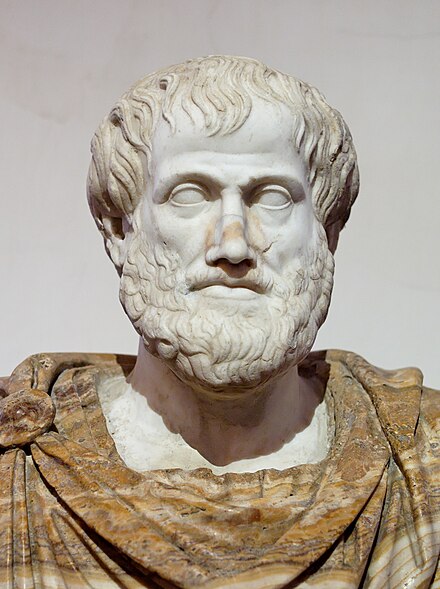
Aristotle
384–322 BC

Aristotle

3,455 chunks · 319 distinct works

Aristotle of Stagira, student of Plato and tutor of Alexander the Great, founded the Lyceum and produced a body of work that shaped every later philosophical tradition. His Nicomachean Ethics articulates virtue as the habituated mean between extremes — the philosophical bedrock of Catholic moral psychology — and his De Anima offers the first systematic treatise on the soul, intellect, and the appetites. Through Aquinas and the Scholastics, Aristotle became 'the Philosopher' for the Catholic tradition and remains foundational to its account of human nature.

Representative works in the corpus
  • Nicomachean Ethics
  • De Anima (On the Soul)
  • Politics
  • Metaphysics
  • Rhetoric
Augustine of Hippo
354–430

Augustine of Hippo

2,960 chunks · 385 distinct works

St. Augustine, Bishop of Hippo and Doctor of the Church, is the towering theologian of Western Christianity whose Confessions invented the spiritual autobiography and whose City of God shaped the Christian philosophy of history. His penetrating analyses of memory, desire, time, and the restless heart anticipate modern psychology by fifteen centuries and remain indispensable for any Catholic account of selfhood, conversion, and grace. Augustine is cited continually across Schola's corpus as the patristic source for the Christian understanding of interiority.

Representative works in the corpus
  • Confessions
  • City of God
  • On the Trinity
  • On Christian Doctrine
  • On Free Choice of the Will
Pope Benedict XVI (Joseph Ratzinger)
1927–2022

Pope Benedict XVI (Joseph Ratzinger)

2,163 chunks · 205 distinct works

Joseph Aloisius Ratzinger — Pope Benedict XVI — was one of the great Catholic theologians of the twentieth century before serving as Prefect of the Congregation for the Doctrine of the Faith under John Paul II and as pope from 2005 to 2013. His encyclicals on love (Deus Caritas Est), hope (Spe Salvi), and charity in truth (Caritas in Veritate) reframed Catholic social and spiritual teaching for a secular age. His writings on reason, conscience, liturgy, and the relationship between faith and culture are cited across the Schola corpus.

Representative works in the corpus
  • Introduction to Christianity
  • Jesus of Nazareth (trilogy)
  • Spe Salvi
  • Deus Caritas Est
  • Caritas in Veritate
Plato
c. 428–348 BC

Plato

2,150 chunks · 191 distinct works

Plato of Athens, student of Socrates and founder of the Academy, wrote the dialogues that gave the West its first sustained inquiry into justice, beauty, the soul, and the Good. The Republic, Symposium, and Phaedo lay the groundwork for the tripartite soul, the theory of the Forms, and the contemplative life — themes that early Christian thinkers, particularly Augustine, baptized into the Catholic tradition. Plato remains the indispensable interlocutor for any Catholic philosophical psychology.

Representative works in the corpus
  • Republic
  • Symposium
  • Phaedo
  • Phaedrus
  • Timaeus
Pope John Paul II (Karol Wojtyła)
1920–2005

Pope John Paul II (Karol Wojtyła)

2,005 chunks · 491 distinct works

Karol Józef Wojtyła — Pope John Paul II — was a Polish phenomenologist and Thomist who, before and during his 27-year pontificate, produced one of the most consequential bodies of Catholic teaching in modern history. His Theology of the Body lectures, his philosophical work The Acting Person, and his encyclicals Veritatis Splendor, Fides et Ratio, and Evangelium Vitae set the framework for Catholic moral theology, marriage and family teaching, and the dialogue between faith and reason. Canonized in 2014.

Representative works in the corpus
  • Theology of the Body
  • The Acting Person
  • Veritatis Splendor
  • Fides et Ratio
  • Evangelium Vitae
Immanuel Kant
1724–1804

Immanuel Kant

1,953 chunks · 163 distinct works

Immanuel Kant of Königsberg is the central figure of modern philosophy whose Critiques redrew the map of metaphysics, ethics, and aesthetics. His Critique of Pure Reason, Groundwork for the Metaphysics of Morals, and Critique of Practical Reason cast a long shadow over every subsequent Catholic engagement with secular thought — both as resource and as opponent. The Schola corpus engages Kant primarily through Catholic critiques of his autonomy-based moral framework and his constraint of religious knowledge to practical postulates.

Representative works in the corpus
  • Critique of Pure Reason
  • Groundwork for the Metaphysics of Morals
  • Critique of Practical Reason
  • Critique of Judgment
  • Religion within the Bounds of Bare Reason
Hans Urs von Balthasar
1905–1988

Hans Urs von Balthasar

1,872 chunks · 83 distinct works

Hans Urs von Balthasar, Swiss Catholic theologian and one of the most important Catholic thinkers of the twentieth century, produced a fifteen-volume trilogy — The Glory of the Lord, Theo-Drama, and Theo-Logic — that recast theology as an aesthetic, dramatic, and logical contemplation of God's self-revelation. A close friend of Adrienne von Speyr and a major influence on John Paul II and Benedict XVI, Balthasar's work on beauty, holiness, kenosis, and the descent into hell pervades Schola's writing on the contemplative dimensions of Catholic life.

Representative works in the corpus
  • The Glory of the Lord
  • Theo-Drama
  • Theo-Logic
  • Love Alone is Credible
  • Dare We Hope That All Men Be Saved?
Jacques Maritain
1882–1973

Jacques Maritain

711 chunks · 68 distinct works

Jacques Maritain, French philosopher and convert from secular atheism, was the leading twentieth-century Thomist outside the cloister and a chief architect of the Universal Declaration of Human Rights. His Distinguish to Unite, or the Degrees of Knowledge, Creative Intuition in Art and Poetry, and Integral Humanism developed a Thomism capable of engaging modern epistemology, aesthetics, and democratic politics. Schola's corpus draws on Maritain for his integration of contemplation and action, art and metaphysics, and faith and pluralist culture.

Representative works in the corpus
  • Distinguish to Unite, or the Degrees of Knowledge
  • Creative Intuition in Art and Poetry
  • Integral Humanism
  • The Person and the Common Good
  • Art and Scholasticism
Martin Heidegger
1889–1976

Martin Heidegger

685 chunks · 74 distinct works

Martin Heidegger, German philosopher and student of Husserl, transformed twentieth-century continental thought with Being and Time (1927), which reframed philosophy as the question of being and reawakened questions of mortality, anxiety, authenticity, and care. Catholic engagement with Heidegger has been wary — owing both to his philosophical project and his political failures — but his analyses of dwelling, technology, and the forgetting of being recur in Schola's writing on modern interiority and the secular age.

Representative works in the corpus
  • Being and Time
  • The Question Concerning Technology
  • Letter on Humanism
  • Discourse on Thinking
  • Poetry, Language, Thought
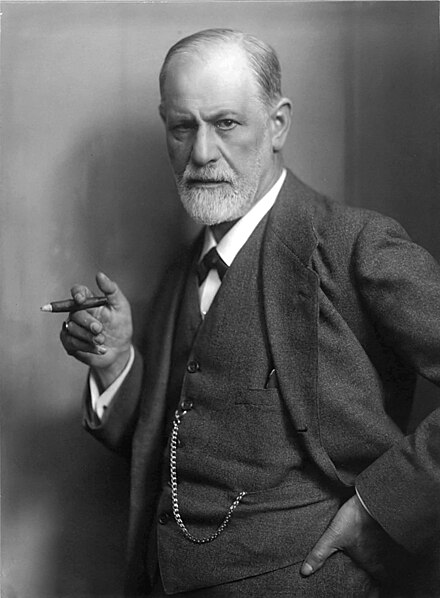
Sigmund Freud
1856–1939

Sigmund Freud

589 chunks · 189 distinct works

Sigmund Freud, Viennese neurologist and founder of psychoanalysis, articulated a model of mind built on unconscious drives, repression, and the dynamic interplay of ego, id, and superego that shaped twentieth-century psychology, art, and self-understanding. The Schola corpus engages Freud both descriptively — as the inescapable predecessor to any contemporary psychology — and critically, particularly through Paul Vitz's work on the psychology of atheism and the displacement of fatherhood in Freud's account of religious origins.

Representative works in the corpus
  • The Interpretation of Dreams
  • Civilization and Its Discontents
  • The Future of an Illusion
  • Beyond the Pleasure Principle
  • The Ego and the Id
Edmund Husserl
1859–1938

Edmund Husserl

466 chunks · 58 distinct works

Edmund Husserl, German mathematician turned philosopher, founded phenomenology — the rigorous descriptive study of consciousness and its objects — through Logical Investigations and Ideas. His method shaped a Catholic phenomenological tradition through Edith Stein, Karol Wojtyła, Max Scheler, and Dietrich von Hildebrand. Schola's corpus draws on Husserlian phenomenology wherever it discusses the structures of experience, intentionality, and the lifeworld behind clinical and spiritual phenomena.

Representative works in the corpus
  • Logical Investigations
  • Ideas Pertaining to a Pure Phenomenology
  • Cartesian Meditations
  • The Crisis of European Sciences
  • The Phenomenology of Internal Time-Consciousness
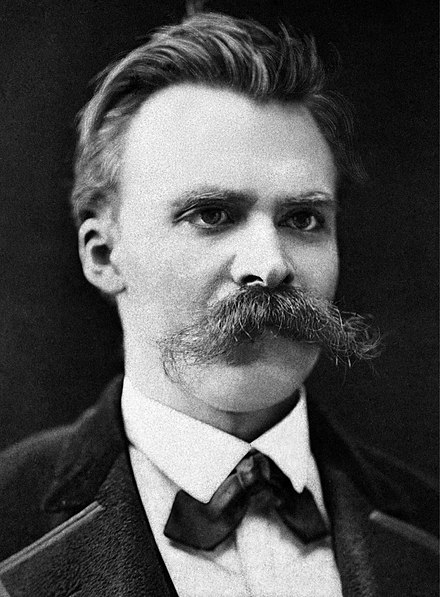
Friedrich Nietzsche
1844–1900

Friedrich Nietzsche

366 chunks · 79 distinct works

Friedrich Nietzsche, German philologist and philosopher, diagnosed the death of God in modern European culture and proposed a transvaluation of values that the Catholic intellectual tradition has spent over a century answering. His critiques of Christian morality as ressentiment, his analyses of nihilism, and his account of the will to power continue to set the agenda for Catholic engagement with secular modernity. The Schola corpus references Nietzsche primarily as the chief modern challenger to Christian anthropology.

Representative works in the corpus
  • Thus Spoke Zarathustra
  • Beyond Good and Evil
  • On the Genealogy of Morality
  • The Gay Science
  • Twilight of the Idols
Carl Jung
1875–1961

Carl Jung

303 chunks · 51 distinct works

Carl Gustav Jung, Swiss psychiatrist and onetime collaborator with Freud, founded analytical psychology with its account of the collective unconscious, archetypes, individuation, and the religious function of the psyche. The Schola corpus engages Jung selectively — finding resources for thinking about symbols, vocation, and the soul's depth, while critically marking his distance from Catholic metaphysics and his identification of God as a psychological pattern rather than a personal Creator.

Representative works in the corpus
  • Psychological Types
  • Modern Man in Search of a Soul
  • The Archetypes and the Collective Unconscious
  • Memories, Dreams, Reflections
  • Psychology and Religion
Étienne Gilson
1884–1978

Étienne Gilson

269 chunks · 44 distinct works

Étienne Gilson, French historian of philosophy and one of the great twentieth-century Thomists, taught at the Sorbonne, the Collège de France, and the Pontifical Institute of Mediaeval Studies in Toronto, which he co-founded. His histories of medieval philosophy and his metaphysical writings — particularly The Spirit of Mediaeval Philosophy and Being and Some Philosophers — restored existential Thomism as a serious philosophical project and continue to inform Catholic philosophical formation.

Representative works in the corpus
  • The Spirit of Mediaeval Philosophy
  • Being and Some Philosophers
  • The Christian Philosophy of Saint Thomas Aquinas
  • The Unity of Philosophical Experience
  • Methodical Realism
Hans-Georg Gadamer
1900–2002

Hans-Georg Gadamer

251 chunks · 21 distinct works

Hans-Georg Gadamer, German philosopher and student of Heidegger, founded philosophical hermeneutics through his magnum opus Truth and Method (1960), which reframed understanding as a dialogical encounter between tradition and interpreter. Gadamer's hermeneutics has proven a fruitful conversation partner for Catholic theology, particularly in scriptural interpretation and the formation of practical wisdom. DMU faculty member Matthew McWhorter has published extensively on the Gadamer-Aquinas dialogue.

Representative works in the corpus
  • Truth and Method
  • Philosophical Hermeneutics
  • Reason in the Age of Science
  • The Idea of the Good in Platonic-Aristotelian Philosophy
  • Hermeneutics, Religion, and Ethics
John Henry Newman
1801–1890

John Henry Newman

247 chunks · 104 distinct works

St. John Henry Newman, Anglican vicar turned Catholic priest and cardinal, was the most consequential English-speaking Catholic intellectual of the nineteenth century. His Apologia Pro Vita Sua, An Essay in Aid of a Grammar of Assent, and The Idea of a University set the terms for Catholic conversion narratives, the epistemology of religious belief, and Catholic higher education. Canonized by Pope Francis in 2019 and declared a Doctor of the Church.

Representative works in the corpus
  • Apologia Pro Vita Sua
  • An Essay in Aid of a Grammar of Assent
  • The Idea of a University
  • An Essay on the Development of Christian Doctrine
  • Parochial and Plain Sermons
Edith Stein (St. Teresa Benedicta of the Cross)
1891–1942

Edith Stein (St. Teresa Benedicta of the Cross)

245 chunks · 73 distinct works

St. Edith Stein — Teresa Benedicta of the Cross — was a Jewish-born German philosopher, Husserl's assistant, and one of the leading phenomenologists of her generation before her conversion to Catholicism, entry into the Discalced Carmelites, and martyrdom at Auschwitz. Her major works Finite and Eternal Being and The Structure of the Human Person carry phenomenology into Catholic metaphysical and anthropological inquiry. Canonized in 1998 and named co-patroness of Europe.

Representative works in the corpus
  • Finite and Eternal Being
  • The Structure of the Human Person
  • On the Problem of Empathy
  • Essays on Woman
  • The Science of the Cross
Carl Rogers
1902–1987

Carl Rogers

239 chunks · 80 distinct works

Carl Ransom Rogers, American psychologist, founded client-centered (person-centered) therapy and was one of the founding figures of humanistic psychology alongside Abraham Maslow. His emphasis on unconditional positive regard, congruence, and empathic understanding shaped clinical practice across psychotherapeutic schools. Schola's corpus engages Rogers both as a positive influence on the therapeutic alliance and through Catholic critiques — particularly William Coulson's later work — of the application of encounter groups to religious communities.

Representative works in the corpus
  • On Becoming a Person
  • Client-Centered Therapy
  • A Way of Being
  • Freedom to Learn
  • Carl Rogers on Personal Power
Viktor Frankl
1905–1997

Viktor Frankl

113 chunks · 48 distinct works

Viktor Emil Frankl, Austrian neurologist, psychiatrist, and Holocaust survivor, founded logotherapy — the 'third Viennese school of psychotherapy' — on the conviction that the human person is fundamentally a seeker of meaning. Man's Search for Meaning, written in nine days after his liberation from Nazi camps, has sold tens of millions of copies and stands as one of the most enduring twentieth-century arguments that meaning, not pleasure or power, is the primary human motivation.

Representative works in the corpus
  • Man's Search for Meaning
  • The Doctor and the Soul
  • The Will to Meaning
  • Man's Search for Ultimate Meaning
  • The Unheard Cry for Meaning
Abraham Maslow
1908–1970

Abraham Maslow

102 chunks · 38 distinct works

Abraham Harold Maslow, American psychologist, was a founder of humanistic psychology and the architect of the hierarchy of needs — physiological, safety, belonging, esteem, self-actualization — that became standard vocabulary in twentieth-century psychology, management, and education. Schola's corpus engages Maslow critically, particularly through Vitz, both for his decisive break with reductive behaviorism and for the limits of his largely secular framing of human flourishing.

Representative works in the corpus
  • Motivation and Personality
  • Toward a Psychology of Being
  • The Farther Reaches of Human Nature
  • Religions, Values, and Peak-Experiences
  • Eupsychian Management
Erik Erikson
1902–1994

Erik Erikson

57 chunks · 26 distinct works

Erik Homburger Erikson, German-American developmental psychologist, articulated the eight-stage model of psychosocial development — trust vs. mistrust through integrity vs. despair — that remains a standard reference in developmental psychology. His concept of identity crisis and his psychobiographies of Luther and Gandhi shaped how the twentieth century thought about identity formation across the lifespan.

Representative works in the corpus
  • Childhood and Society
  • Identity: Youth and Crisis
  • Young Man Luther
  • Gandhi's Truth
  • The Life Cycle Completed
Bernard Lonergan
1904–1984

Bernard Lonergan

57 chunks · 8 distinct works

Bernard Joseph Francis Lonergan, S.J., Canadian Jesuit philosopher and theologian, produced one of the most ambitious twentieth-century attempts to integrate Thomism with critical philosophy of mind. His Insight: A Study of Human Understanding and Method in Theology mapped the cognitional structure of human knowing — experience, understanding, judgment, decision — as the basis for theological method. Lonergan's influence is felt across Catholic philosophical psychology, including in DMU's integrative work.

Representative works in the corpus
  • Insight: A Study of Human Understanding
  • Method in Theology
  • A Second Collection
  • Verbum: Word and Idea in Aquinas
  • Philosophy of God, and Theology
LK
1927–1987

Lawrence Kohlberg

32 chunks · 14 distinct works

Lawrence Kohlberg, American developmental psychologist, extended Jean Piaget's work on moral reasoning into a six-stage theory of moral development from pre-conventional through post-conventional levels. Schola's corpus engages Kohlberg both as an important interlocutor for moral psychology and through Paul Vitz's substantive critiques of the limitations of stage theory when measured against a Catholic account of virtue and moral character.

Representative works in the corpus
  • Essays on Moral Development, Vol. I: The Philosophy of Moral Development
  • Essays on Moral Development, Vol. II: The Psychology of Moral Development
  • Moral Stages: A Current Formulation
  • The Just Community Approach
  • Moral Education in the Schools
Section IV · 13 Figures

Sacred Figures

The patriarchs, prophets, apostles, and saints whose names recur throughout the corpus. Tagged so that articles citing them can be retrieved and cross-referenced with magisterial commentary.

Saint Paul
6,390 citations

Saint Paul

Sacred Figure

The Apostle of the Gentiles, formerly Saul of Tarsus, whose epistles to the Romans, Corinthians, Galatians, Ephesians, and others form a major portion of the New Testament and shaped Christian theology of grace, justification, and the Church as Body of Christ.

Saint Luke
3,333 citations

Saint Luke

Sacred Figure

Evangelist, physician, and companion of Paul, author of the Third Gospel and the Acts of the Apostles. Patron of physicians, surgeons, and artists. His Gospel emphasizes Christ's mercy toward the poor, the outcast, and the penitent.

Mary, Mother of God
3,054 citations

Mary, Mother of God

Sacred Figure

The Blessed Virgin, Theotokos, Mother of Jesus Christ and Mother of the Church. Conceived without original sin, she gave her free consent at the Annunciation and was assumed body and soul into heaven. The first and greatest of Christian disciples.

Saint Matthew
2,853 citations

Saint Matthew

Sacred Figure

Apostle and Evangelist, formerly a tax collector called by Jesus from his customs post. Traditionally identified as the author of the First Gospel, which presents Jesus as the fulfillment of the Law and the Prophets.

King David
2,393 citations

King David

Sacred Figure

Second king of Israel, ancestor of Christ, traditional author of the Psalms. A type of the Messiah whose covenant with God promised an eternal throne fulfilled in the Kingdom of Christ.

Saint Peter
2,320 citations

Saint Peter

Sacred Figure

Simon Peter, fisherman of Bethsaida, first among the Apostles, the rock on which Christ built his Church and first Bishop of Rome. Author of two New Testament epistles. Martyred under Nero, traditionally by inverted crucifixion.

Moses
689 citations

Moses

Sacred Figure

Prophet, lawgiver, and liberator who led Israel out of Egyptian bondage and received the Decalogue on Mount Sinai. Author traditionally of the Pentateuch and the great Old Testament type of Christ as mediator of the new covenant.

Isaiah
674 citations

Isaiah

Sacred Figure

The major prophet of the eighth century BC whose oracles announce the Suffering Servant, the virgin who shall conceive, and the new heavens and new earth. Quoted more often in the New Testament than any other prophet.

Abraham
665 citations

Abraham

Sacred Figure

Patriarch and father in faith of Jews, Christians, and Muslims, whose obedience to God's call out of Ur and willingness to offer Isaac established the covenant fulfilled in Christ.

Jacob
597 citations

Jacob

Sacred Figure

Son of Isaac and grandson of Abraham, renamed Israel after wrestling with the angel at Peniel. Father of the twelve patriarchs whose descendants became the twelve tribes of Israel.

Saint John the Baptist
513 citations

Saint John the Baptist

Sacred Figure

Prophet and forerunner of Christ, son of Zechariah and Elizabeth, who baptized Jesus in the Jordan and bore witness to him as the Lamb of God. Martyred by Herod Antipas for rebuking his unlawful marriage.

Saint Joseph
137 citations

Saint Joseph

Sacred Figure

Spouse of the Blessed Virgin Mary, foster father of Jesus, descendant of David, and the just man entrusted with the protection of the Holy Family. Patron of the universal Church, of workers, and of a happy death.

Saint John the Apostle
81 citations

Saint John the Apostle

Sacred Figure

Apostle and Evangelist, son of Zebedee and brother of James, the beloved disciple who reclined at the Last Supper and stood at the foot of the Cross. Traditionally author of the Fourth Gospel, three epistles, and the Book of Revelation.

Section V · 47 Documents

The Magisterium

Encyclicals, conciliar constitutions, dicasterial instructions, and papal addresses — the official teaching of the Catholic Church that grounds Schola's Catholic identity.

Pope St. John Paul II (Karol Wojtyła)

John Paul II reigned from 1978 to 2005 — the second-longest pontificate in modern history — and produced fourteen encyclicals along with hundreds of apostolic letters, exhortations, and addresses. The Schola corpus draws particularly on his moral, social, and missionary teaching.

  • Veritatis Splendor (1993)207 chunks

    Encyclical on fundamental moral theology — defends the existence of moral absolutes and the integrity of the Catholic moral tradition against proportionalism.

  • Fides et Ratio (1998)166 chunks

    Encyclical on the relationship between faith and reason as 'two wings on which the human spirit rises.'

  • Redemptoris Missio (1990)152 chunks

    Encyclical on the permanent validity of the Church's missionary mandate.

  • Dominum et Vivificantem (1986)145 chunks

    Encyclical on the Holy Spirit in the life of the Church and the world.

  • Centesimus Annus (1991)132 chunks

    Centenary encyclical reaffirming Catholic social doctrine in light of the fall of communism.

  • Ut Unum Sint (1995)122 chunks

    Encyclical on commitment to ecumenism.

  • Redemptoris Mater (1987)120 chunks

    Encyclical on the Blessed Virgin Mary in the life of the pilgrim Church.

  • Laborem Exercens (1981)106 chunks

    Encyclical on human work as a key to the social question.

  • Redemptor Hominis (1979)104 chunks

    John Paul II's programmatic first encyclical on Christ the Redeemer of man.

  • Sollicitudo Rei Socialis (1987)102 chunks

    Encyclical on twenty years of Catholic social teaching after Populorum Progressio.

  • Dives in Misericordia (1980)85 chunks

    Encyclical on the mercy of God as the central content of the Gospel.

  • Ecclesia de Eucharistia (2003)82 chunks

    Encyclical on the Eucharist in its relationship to the Church.

Pope Francis

Pope Francis, the first Latin American and first Jesuit pope, has emphasized mercy, the peripheries, ecological responsibility, and synodality. His writings drive substantial portions of contemporary Catholic discourse.

  • Evangelii Gaudium (2013)246 chunks

    The programmatic apostolic exhortation of the Francis pontificate — joy of the Gospel and the missionary transformation of the Church.

  • Laudato Si' (2015)177 chunks

    Encyclical on care for our common home — a theological and ethical reflection on ecology, the cry of the earth, and the cry of the poor.

  • Dilexit Nos (2024)148 chunks

    Encyclical on devotion to the Sacred Heart of Jesus.

  • Amoris Laetitia (2016)249 chunks

    Post-synodal apostolic exhortation on love in the family.

  • Antiqua et Nova (2025)108 chunks

    Vatican note on artificial intelligence — anthropology and ethics for the age of generative AI.

  • Gaudete et Exsultate (2018)96 chunks

    Apostolic exhortation on the call to holiness in today's world.

  • Dignitas Infinita (2024)75 chunks

    DDF declaration on human dignity.

  • Lumen Fidei (2013)83 chunks

    Encyclical on faith — begun by Benedict and completed by Francis.

  • Fraternal Life in Community99 chunks

    CICLSAL document on community life in religious institutes.

  • Pope Francis interviews (2023)112 chunks

    Conversations with Jorge Fontevecchia and others.

Pope Leo XIV (Robert F. Prevost)

Robert Francis Prevost, elected as Pope Leo XIV in 2025, is the first American pope. His pre-papal writings on the office and authority of the bishop and his initial papal exhortation are represented in the corpus.

  • The Office and Authority of the Bishop (Prevost)314 chunks

    Prevost's pre-papal study on episcopal office and authority in the Catholic tradition.

  • Dilexi Te (2025)207 chunks

    Apostolic exhortation on love for the poor — issued 4 October 2025, the feast of St. Francis.

Second Vatican Council (1962–1965)

The Second Vatican Council, convened by John XXIII and concluded by Paul VI, produced sixteen documents that reframed Catholic life for the modern world. The Schola corpus includes all four constitutions and most of the decrees and declarations.

  • Gaudium et Spes163 chunks

    Pastoral Constitution on the Church in the Modern World — the Council's longest document, framing the Church's dialogue with contemporary culture.

  • Lumen Gentium144 chunks

    Dogmatic Constitution on the Church — the universal call to holiness, the People of God, and the hierarchical communion.

  • Ecclesiam Suam (1964)82 chunks

    Paul VI's first encyclical, written alongside the Council, on the dialogues the Church must conduct with God, with itself, and with the world.

  • Ad Gentes79 chunks

    Decree on the Church's missionary activity.

  • Presbyterorum Ordinis66 chunks

    Decree on the ministry and life of priests.

  • Sacrosanctum Concilium54 chunks

    Constitution on the Sacred Liturgy — the Council's first promulgated text.

  • Apostolicam Actuositatem51 chunks

    Decree on the apostolate of the laity.

  • Christus Dominus44 chunks

    Decree concerning the pastoral office of bishops.

  • Unitatis Redintegratio32 chunks

    Decree on ecumenism.

Pope St. Paul VI

Giovanni Battista Montini, Paul VI (1963–1978), guided the Second Vatican Council to completion and shepherded the Church through the turbulent post-conciliar years.

  • Populorum Progressio (1967)57 chunks

    Encyclical on the development of peoples — major contribution to Catholic social doctrine.

  • Humanae Vitae (1968)35 chunks

    Encyclical reaffirming the Church's teaching against artificial contraception — a defining document of twentieth-century Catholic moral theology.

Pope Venerable Pius XII

Eugenio Pacelli, Pius XII (1939–1958), guided the Church through the Second World War and authored encyclicals of lasting theological significance.

  • Mystici Corporis Christi (1943)94 chunks

    Encyclical on the Church as the Mystical Body of Christ — central reference for twentieth-century Catholic ecclesiology.

  • Acta Apostolicae Sedis, 19501,535 chunks

    Volume 42 of the Vatican's official record — including Munificentissimus Deus defining the Assumption.

CELAM — Aparecida and the Latin American Magisterium

The Fifth General Conference of the Latin American Episcopate at Aparecida (2007) — drafted under then-Cardinal Bergoglio — has shaped the Latin American Church and is widely read as the proximate source for Pope Francis's papal program.

  • Aparecida Concluding Document (2007)745 chunks

    The CELAM Aparecida document on disciples and missionaries of Jesus Christ.

Other Dicasteries and Documents

The Schola corpus also includes documents from Vatican dicasteries, episcopal conferences, and earlier pontificates.

  • Male and Female He Created Them (CEC, 2019)43 chunks

    Congregation for Catholic Education document on gender theory in education.

  • Faciem tuam, Domine, requiram — The Service of Authority and Obedience72 chunks

    Vatican document on authority and obedience in religious life.

  • The Catholic School46 chunks

    Sacred Congregation for Catholic Education document.

  • Unleash the Gospel (2017)94 chunks

    Pastoral letter of Archbishop Vigneron of Detroit.

  • New Model of Pastoral Care for the Sacraments50 chunks

    Pastoral guidance on sacramental ministry.

  • Pope Francis on Child Abuse13 chunks

    Collected addresses on the protection of minors.

  • Gregory VII (selected texts)14 chunks

    Documents of the eleventh-century reformer pope.

  • Unam Sanctam (Boniface VIII, 1302)5 chunks

    The famous bull on the unity of the Church.

  • Jay Report (2012 Update)35 chunks

    John Jay College study on the protection of children and young people in the Church.

Section VI · 61 Papers

DMU Faculty Papers

Peer-reviewed articles, book chapters, and conference papers from Divine Mercy University faculty — the working research that informs the Catholic Christian Meta-Model of the Person and its clinical applications.

William J. Nordling, Ph.D.

Founding faculty of the Institute for the Psychological Sciences, past president of the Catholic Psychotherapy Association, and lead author across the chapters of the Catholic Christian Meta-Model of the Person.

  1. Cochran, Cochran, Nordling, McAdam, & Miller (2010) — Two case studies of Child-Centered play therapy for children referred with highly disruptive behavior. International Journal of Play Therapy.
  2. Lee & Nordling (2020) — Case conceptualization: The Catholic Christian meta-model of the person as a framework. In Meta-model of the person (DMU Press).
  3. Nordling, Payne, Sweeney, & Titus (2020) — Principles for training Catholic Christian mental health professionals.
  4. Nordling, Vitz, & Titus (2020) — Introduction to a Catholic Christian meta-model of the person for mental health.
  5. Scrofani & Nordling (2011) — Institute for the Psychological Sciences: A Catholic professional school of clinical psychology. Journal of Psychology and Christianity.
  6. Titus, Nordling, & Vitz (2020) — Fulfilled through vocation.
  7. Titus, Nordling, & Vitz (2020) — Volitional and free.
  8. Titus, Vitz, & Nordling (2020) — A personal wholeness (unity).
  9. Titus, Vitz, & Nordling (2020) — Created in the Image of God.
  10. Titus, Vitz, & Nordling (2020) — Interpersonally relational.
  11. Titus, Vitz, & Nordling (2020) — Rational.
  12. Titus, Vitz, & Nordling (2020) — The methodology and presuppositions of the Catholic Christian meta-model.
  13. Titus, Vitz, Nordling, McWhorter, & Gross (2020) — Fulfilled in virtue.
  14. Titus, Vitz, Nordling, & the DMU Group (2020) — Theological, philosophical, and psychological premises.
  15. Outcomes and stages of child-centered play therapy for a child with highly disruptive behavior driven by self-concept issues.

Paul C. Vitz, Ph.D.

Senior Scholar at Divine Mercy University, emeritus professor of psychology at NYU, convert from atheism, and author of foundational works on the psychology of atheism, Christian personality theory, and the integration of psychology and Catholic faith.

  1. Alvarez-Segura, Echavarria, & Vitz (2017) — A psycho-ethical approach to personality disorders: The role of volitionality. New Ideas in Psychology.
  2. Alvarez-Segura, Echavarria, & Vitz (2015) — Re-conceptualizing Neurosis as a Degree of Egocentricity. Journal of Religion & Health.
  3. Cochran & Vitz (1983) — Child protective divorce laws. Family Law Quarterly.
  4. Vitz & Hazan (1969) — Memory during probability learning. Journal of Experimental Psychology.
  5. Vitz & Todd (1967) — A model of learning for simple repeating binary patterns.
  6. Vitz & Todd (1969) — A coded element model of perceptual processing.
  7. Vitz & Todd (1971) — A model of the perception of simple geometric figures. Psychological Review.
  8. Vitz (1985) — Covenanting: A Christian path to fulfillment. Discipleship Journal.
  9. Vitz (2001) — Narrative and theological aspects of Freudian and Jungian psychology.
  10. Vitz (2014) — Hatred and Christian Identity.
  11. Vitz (2018) — The psychology of atheism: From defective fathers to autism.
  12. Vitz (2019) — A hierarchical model of binary pattern learning.
  13. Vitz & Gartner (1989) — The vicissitudes of original sin: A reply to Bridgman and Carter.
  14. Vitz & Meade (2011) — Self-forgiveness in psychology and psychotherapy: A critique.
  15. Vitz (1997) — A Christian theory of personality.
  16. Vitz (1998) — The future of the university: From postmodern to transmodern.
  17. Vitz (2002) — The fatherhood of God: Support from psychology.
  18. Vitz (2007) — Encyclopedia of Catholic Thought entries on Maslow, Freud, and Psychology.
  19. Vitz & Mango (1997) — Kernbergian psychodynamics and religious aspects of the forgiveness process.
  20. Vitz & Mango (1997) — Hatred and forgiveness: Major moral dilemmas.
  21. Vitz & Faria (2022) — The Absence of Positive Psychosocial Characteristics in the Lives of Mass School Shooters. J Police Crim Psych.
  22. Vitz (1985) — The Return of Christian manhood. Pastoral Renewal.
  23. Vitz (1990) — Self psychologies. Dictionary of pastoral care and counseling.
  24. Vitz (1992) — Narratives and counseling. Journal of Psychology and Theology.
  25. Vitz (1994) — Critiques of Kohlberg's model of moral development. Revista Espanola de Pedagogia.
  26. Vitz (1985) — Psychology as religion. In Benner (Ed.), Baker encyclopedia of psychology.
  27. Vitz (1985) — The dilemma of narcissism.
  28. Vitz (1968) — Information, run structure and binary pattern complexity.
  29. Vitz (1972) — Preference for tones as a function of frequency and intensity.
  30. Vitz (1977) — Honoring Arnheim (book review).
  31. Vitz (1985) — Psychoanalysis and religion: Cooperation or conflict? (book review).
  32. Vitz (1964) — Preferences for rates of information presented by sequences of tones.
  33. Vitz (1966) — Affect as a function of stimulus variation.
  34. Rose & Vitz (1966) — The role of runs in probability learning.
  35. Vitz & Hazan (1974) — Learning numerical progressions.
  36. Vitz (2015) — Comments on "On Christian Psychology" (interview).

Matthew R. McWhorter, Ph.D.

Assistant Professor of Integrative Studies at Divine Mercy University, working on the integration of religio-philosophical psychology with the contemporary human sciences, with particular expertise in Aquinas, Gadamer, and cross-cultural psychology.

  1. McWhorter (2021) — Aquinas, Joseph Selling, and the Exterior Moral Act. International Journal of Systematic Theology.
  2. McWhorter (2016) — From cultural signs to transcultural realities: The contribution of Matthew Lamb for understanding Lonergan's metamethod.
  3. McWhorter (2020) — Aquinas and the Moral Virtues of a Christian Person. American Catholic Philosophical Quarterly.
  4. McWhorter (2020) — Integrating Spirituality and Mental Health Services: Insights from Benedict Ashley on Psychotherapy. National Catholic Bioethics Quarterly.
  5. McWhorter (2022) — Interpreting Aquinas: Resources from Gadamer's Hermeneutics. International Philosophical Quarterly.
  6. McWhorter (2019) — Balancing Value Bracketing with the Integration of Moral Values in Psychotherapy. The Linacre Quarterly.
  7. McWhorter (2021) — Gadamer's philosophical hermeneutics and the formation of mental health professionals. Journal of Theoretical and Philosophical Psychology.
  8. McWhorter (2023) — Hwang's Philosophy for Developing an Indigenous Cultural Psychology. Culture & Psychology.
  9. McWhorter (2024) — Integration as the goal of indigenization: The cross-cultural psychology of Durganand Sinha. History of Psychology.
  10. McWhorter (2024) — Jean Leclercq, Modern Psychology, & Structural Hermeneutics. The Downside Review.
Section VII · Top 27 Most-Cited

Curated Readings

The editor's working library — classical and contemporary writers in philosophy, theology, economics, and spirituality — ranked here by depth of inclusion in the corpus. The full curated collection holds 163 authors and 345 works.

St. Thomas Aquinas

Summa Theologiae (Prima Pars, Prima Secundae, Secunda Secundae)

Aquinas's magnum opus, the medieval Catholic synthesis of philosophy and theology. The three parts in the corpus — God, the moral life, and the virtues — total over nine thousand chunks, making the Summa the largest single work in Schola. Foundation for the entire DMU Catholic Christian Meta-Model of the Person.

9,052 chunks in corpus
Joseph A. Schumpeter

History of Economic Analysis

Schumpeter's posthumous masterwork (1954), the most comprehensive history of economic thought ever written, tracing analytical methods from the Scholastics through the marginalist revolution.

2,573 chunks in corpus
Murray Rothbard

Man, Economy, and State

Rothbard's 1962 treatise systematizing Austrian economics — a deductive reconstruction of price theory and capital theory from praxeological first principles.

2,313 chunks in corpus
Ludwig von Mises

Human Action: A Treatise on Economics

Mises's 1949 magnum opus, the most ambitious modern statement of the Austrian school — grounding all economics in human action conceived as purposive choice.

2,611 chunks in corpus
Karl Popper

The Open Society and Its Enemies

Popper's two-volume 1945 indictment of Plato, Hegel, and Marx as enemies of the open society — a defense of liberal democracy and piecemeal social engineering against utopian historicism.

1,503 chunks in corpus
Joseph de Guibert, S.J.

The Spirituality of the Society of Jesus

The classic historical and theological study of Ignatian spirituality — discernment, the spiritual exercises, and the Jesuit vocation.

1,360 chunks in corpus
Jacques Maritain

Distinguish to Unite, or The Degrees of Knowledge

Maritain's epistemological masterpiece (1932), distinguishing the modes of knowing — scientific, philosophical, mystical — without collapsing them into one another.

1,236 chunks in corpus
Alphonsus Rodriguez, S.J.

The Practice of Perfection and Christian Virtues (Vols. 1 & 2)

Rodriguez's seventeenth-century classic on the practice of religious life — virtue by virtue, vice by vice — remained the standard spiritual reading for generations of religious.

1,930 chunks in corpus
Ferdinand Ulrich

Homo Abyssus: The Drama of the Question of Being

Ulrich's magisterial 1961 metaphysics of being as gift — recovered as one of the most important Catholic philosophical works of the twentieth century by D.C. Schindler's translation.

1,068 chunks in corpus
F. A. Hayek

The Constitution of Liberty

Hayek's 1960 statement of the case for a free society — the rule of law, the limits of planning, and the principles of constitutional government.

1,047 chunks in corpus
F. A. Hayek

Law, Legislation and Liberty

Hayek's three-volume work (1973–1979) on the spontaneous order of a free society and the mirage of social justice.

2,016 chunks in corpus
Jesús Huerta de Soto

Introducción a la Economía

Huerta de Soto's Spanish-language introduction to economics from the Austrian School perspective.

980 chunks in corpus
Ludwig von Mises

Socialism: An Economic and Sociological Analysis

Mises's 1922 critique of socialism — including the calculation problem that defined twentieth-century economic debate.

978 chunks in corpus
Fray Justo Pérez de Urbel

Vida de Cristo

Pérez de Urbel's Life of Christ — a substantial Spanish-language meditative biography of the Lord.

967 chunks in corpus
Mark Mitchell

Being and Participation in Cornelio Fabro (Vols. 1 & 2)

Mitchell's two-volume study of Cornelio Fabro's metaphysics of participation, central to twentieth-century retrievals of Thomism.

1,739 chunks in corpus
Eugen Böhm-Bawerk

Capital and Interest

Böhm-Bawerk's foundational treatise on capital theory and the explanation of interest as a time-preference phenomenon.

879 chunks in corpus
Robert Kaplan & David Norton

Strategy Maps

The Kaplan-Norton framework for visualizing organizational strategy through linked operational, customer, and financial objectives.

864 chunks in corpus
F. A. Hayek

Prices and Production

Hayek's 1931 LSE lectures on Austrian capital theory and the structure of production.

860 chunks in corpus
F. A. Hayek (J. Mill collection)

Hayek on Mill: The Mill-Taylor Friendship and Related Writings

Volume XVI of the Collected Works — Hayek's editing of Mill's correspondence with Harriet Taylor.

858 chunks in corpus
Henry Mintzberg

Managers Not MBAs: A Hard Look at the Soft Practice of Managing

Mintzberg's critique of MBA education and his alternative vision of management as craft.

857 chunks in corpus
F. A. Hayek

The Pure Theory of Capital

Hayek's 1941 treatise on capital theory — the most technical of his contributions to Austrian economics.

728 chunks in corpus
Ludwig von Mises

The Theory of Money and Credit

Mises's 1912 treatise applying marginal utility to monetary theory — the foundation of Austrian monetary economics.

839 chunks in corpus
Eric Verzuh

The Portable MBA in Project Management

A practitioner's framework for managing projects under uncertainty.

840 chunks in corpus
Pope John Paul II

Man and Woman He Created Them: A Theology of the Body

John Paul II's 129 Wednesday Audiences (1979–1984) developing his anthropological vision of the body as language of the gift of self.

823 chunks in corpus
Hans Urs von Balthasar

The Glory of the Lord, Vol. 5: The Realm of Metaphysics in the Modern Age

Balthasar's theological aesthetic engaging modern metaphysics — Descartes, Kant, Hegel, Heidegger — from a Catholic standpoint.

746 chunks in corpus
Jacques Maritain

Creative Intuition in Art and Poetry

Maritain's A.W. Mellon Lectures in the Fine Arts (1953) on the metaphysics of artistic creation.

731 chunks in corpus
St. Thomas Aquinas

Summa Theologiae (additional Prima Pars text)

A second textual stream of the Prima Pars in the corpus — testifying to the centrality of Aquinas's treatise on God.

2,197 chunks in corpus